What exactly are PFAS?
Perfluorinated and polyfluoroalkyl substances (perfluorinated compounds, PFCs) are straight or branched chain hydrocarbons with all hydrogen atoms replaced by fluorine, and are a large group of synthetic chemicals consisting of thousands of individual substances. Among them, perfluorooctanoic acid (PFOA) and perfluorooctane sulfonate (PFOS) are the two representative substances of carboxylic acid and sulfonic acid among PFCs.
Why is PFAS testing important?
Per- and polyfluoroalkyl substances (PFASs) are a group of synthetic chemicals that are widely used in consumer products, including food packaging, textiles, and apparel due to their water, stain, and oil-repellent properties. However, the persistent, bioaccumulative, and toxic nature of these chemicals has raised concerns over their impact on human health and the environment. As a result, governments around the world are taking measures to restrict and regulate the use of PFASs.
Brands and retailers that use PFASs in their products must understand the market requirements and take appropriate actions to mitigate regulatory and financial risks associated with these chemicals. This includes establishing proactive and reactive controls for testing to estimate exposure and risk.
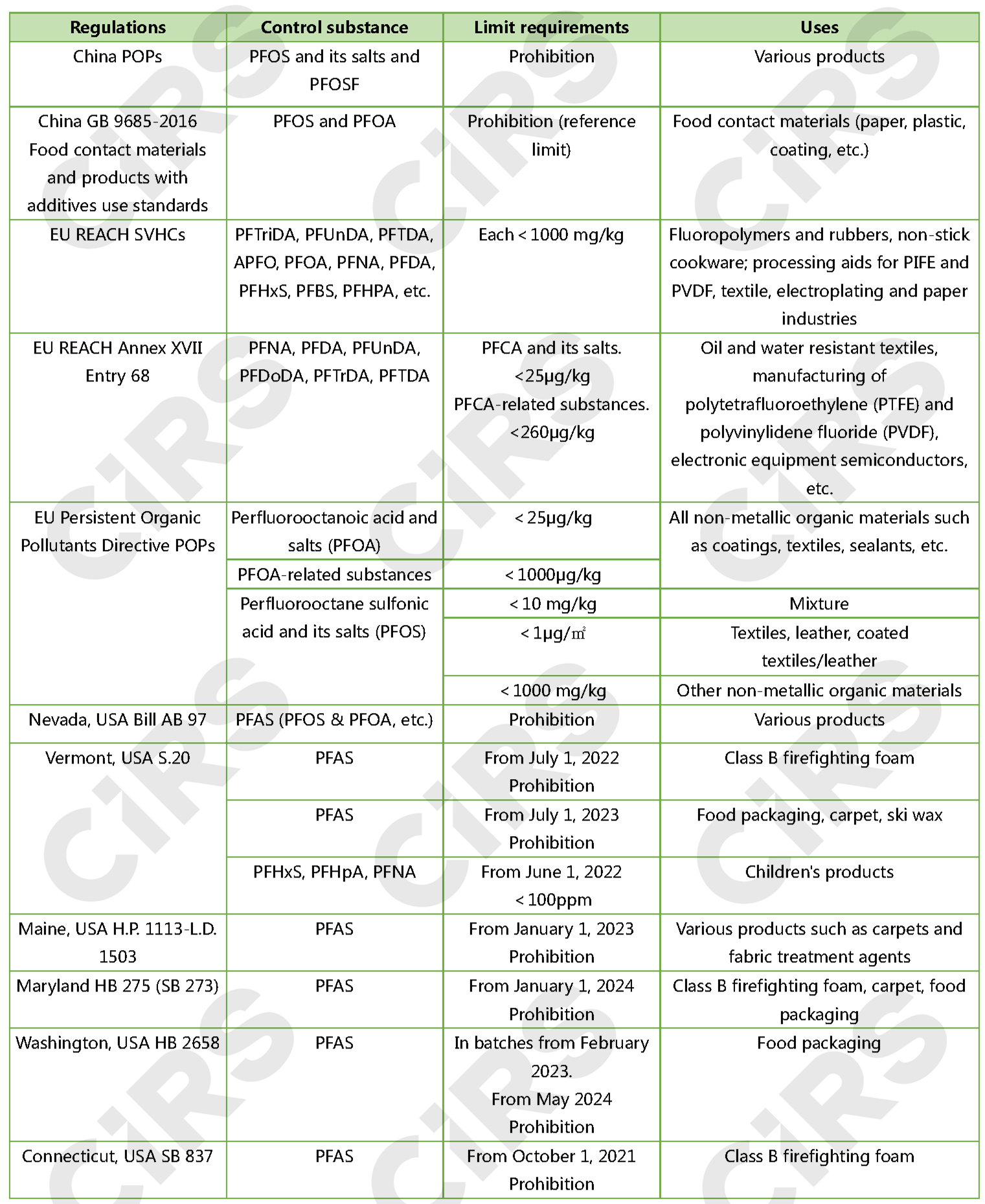
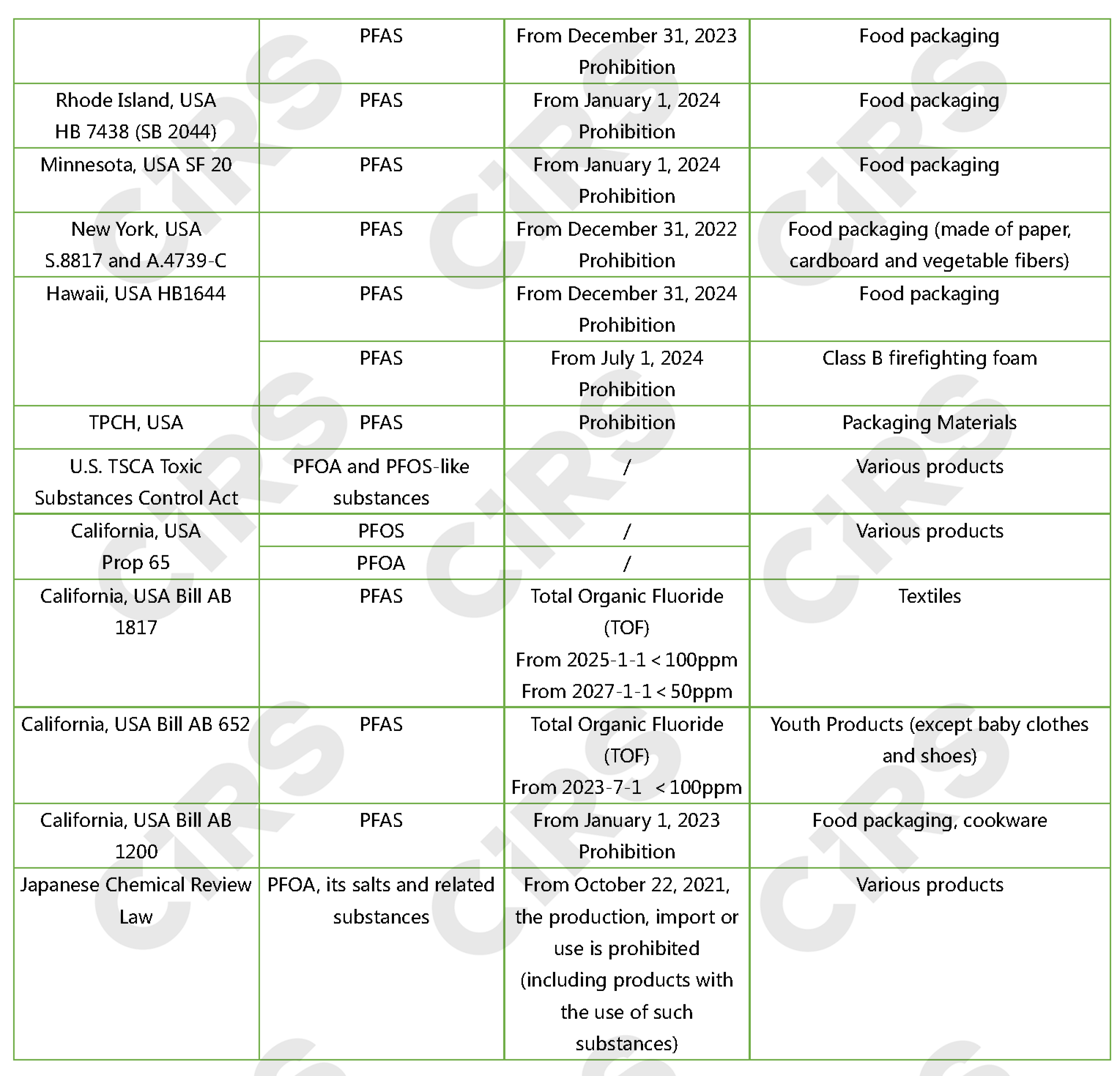
Requirements of PFAS-related policies and regulations
PFAS substances have been acceded to the Stockholm Convention at various times and are strictly regulated globally due to their simultaneously persistent, bioaccumulation, and toxic hazard characteristics. Except for specific exemptions or specific uses, they are gradually being phased out in the market. Below we will briefly analyze its control in mainstream countries or regions around the world.